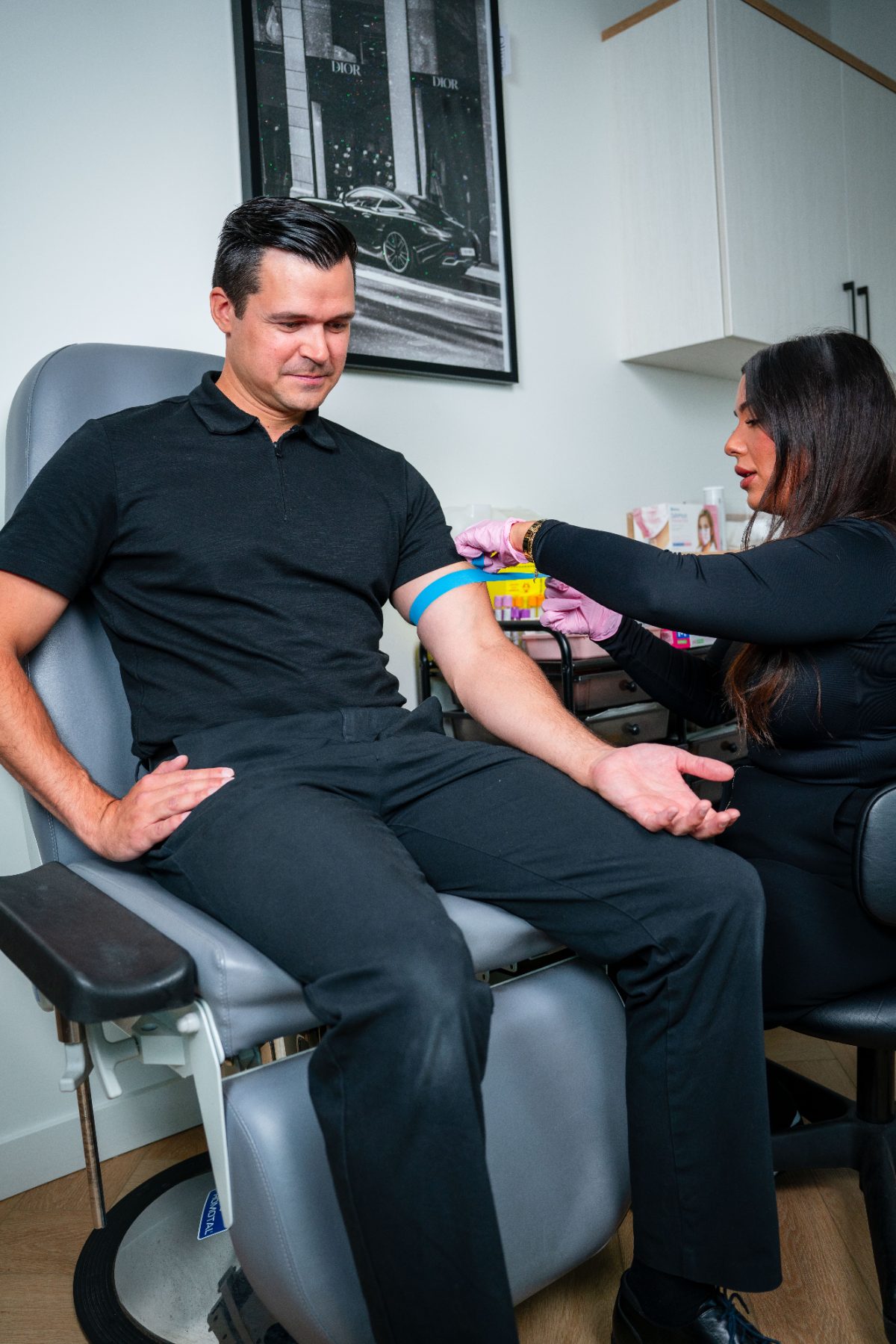

How Soon After Sex Should You Get Tested for STDs?
If you’ve recently had unprotected sex, started a new relationship, experienced symptoms or simply have a doubt, you may be wondering when it is appropriate to get tested for sexually transmitted infections (STDs).

Many people assume they should test immediately, but in reality each infection has a specific “window period,” which is the time between exposure and when the infection becomes detectable through testing.
One of the most common questions patients ask is how long they should wait after sexual contact before getting tested.
Understanding these timelines can help ensure that test results are accurate and provide peace of mind. If you are unsure about the timing or which tests may be appropriate, a consultation with a healthcare professional can help guide the screening process.
At SM Privé, patients can access same day appointments for confidential STD consultations and screening services at one of our private clinics in Montreal, Town of Mount Royal, and Laval.
What is the STD testing window period?
The window period refers to the time between exposure to an infection and when it can be reliably detected by a test. Testing too early may produce a negative result even if the infection is present.
Because each infection behaves differently, healthcare professionals often recommend waiting a certain number of days after exposure before testing.
If you are unsure about the appropriate timing, a confidential STD testing consultation can help determine when testing may be most reliable.
STD testing timeline after exposure
While testing recommendations may vary depending on the situation, general guidelines include:
-
Herpes
Symptoms can appear within about 2 to 4 days after exposure. Testing is usually performed when lesions or sores are present. Because herpes sores typically heal within 7 to 10 days, it is important to consult quickly if symptoms appear. -
Chlamydia and gonorrhea
These infections can usually be detected about 7 days after exposure, although many people do not experience symptoms. -
HIV
Blood tests can often detect HIV within 2 to 6 weeks, depending on the type of test used. -
Syphilis
Syphilis may be detectable through blood testing within 3 to 6 weeks after exposure.
Because timing can vary depending on the individual and the type of exposure, healthcare professionals often recommend testing around two weeks after potential exposure for several common infections.
Can you have an STD without symptoms?
Yes. Many sexually transmitted infections do not cause noticeable symptoms, especially in the early stages. For example, infections such as chlamydia and gonorrhea may be present without obvious signs.
This is why testing may be recommended even when a person feels well, particularly after unprotected intercourse or when entering a new sexual relationship.
When should you consider getting tested?
Testing may be recommended in several situations, including:
- after unprotected sexual contact
- when starting a new relationship
- if you experience symptoms such as discharge, lesions, or pelvic pain
- as part of routine sexual health screening
A healthcare professional can help determine which tests may be appropriate based on your individual situation.
If you are unsure about the timing of testing or which tests may be appropriate, a confidential consultation at SM Privé can help guide you through the process.
Our Clinic Locations
SM Privé Downtown Montreal
1444 Sherbrooke Street West, Suite 100
Montreal, QC H3G 1K4
Phone: +1 (866) 767-2683
Email: [email protected]
SM Privé Mount Royal (TMR)
3333 Blvd Graham, Suite 200
Mont Royal, QC H3R 3L5
Phone: +1 (866) 767-2683
Email: [email protected]
SM Privé Laval
1500 Montgolfier, Suite 400
Laval, QC H7T 0A2
Phone: +1 (866) 767-2683
Email: [email protected]
Located inside Sante Optimum Clinic